Why Is The Location Icon Randomly Showing On My iPhone?

Updated:
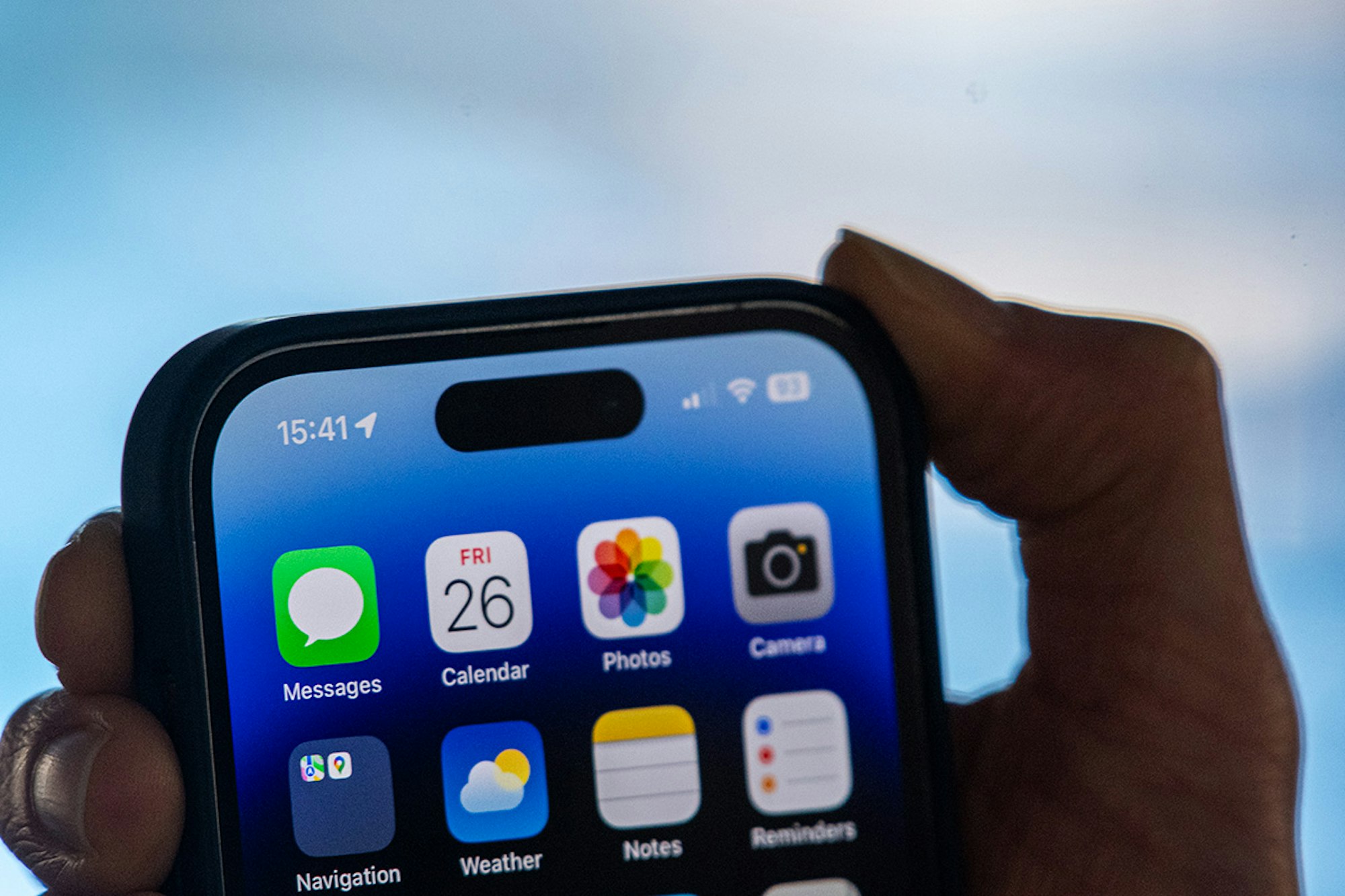
Have you ever noticed the tiny arrow icon on the top-right corner of your iPhone screen?
This location services icon indicates that an application or feature on your device is actively using or has recently accessed your location.
But what happens if you see this icon unexpectedly? In this guide we’ll explore the reasons behind it and how you can protect your privacy.
Reasons Why Your Location Services Arrow Is Showing
There are many reasons why your iPhone’s location is turned on. Below, we’ll explore some of them.
1. Family tracking apps
A family tracking app like Life360 constantly shares a registered device’s location with other users. It ensures that family members can track each other for safety and coordination purposes.
While undoubtedly useful, these apps may cause the location services icon to display continuously, depending on the settings and frequency of location requests.
They can also be misused by snoopers in order to spy on you.
As part of our 2025 Mobile Security Roundup, we looked at the most popular location sharing apps across all phones. Here’s the top 5:
- Life360
- Find My Kids
- FamilyWall
- AT&T Secure Family
- Tracki GPS
Find hidden location tracking apps
Run a quick scan with Certo AntiSpy and uncover hidden location tracking apps on your iPhone.
2. Navigation apps
When using Apple Maps, Google Maps, or Waze for navigation, your iPhone continues to track your current location as long as the navigation is active.
These GPS-driven apps ensure that you receive real-time directions based on your current position and any changes in your route. These apps might still periodically check your location even if you’ve minimized the app.
3. Sharing your location with another device
Location services are also activated when you share your position through Apple’s Find My service, which helps users locate their Apple products.
Also, Google Maps has a Location Sharing feature. As long as your location is shared, the service accesses your position, and the location icon may remain visible.
4. Websites accessing location data
Sometimes, it’s not a particular app but rather a website you’ve accessed via Safari or another browser that’s tapping into your location data.
Websites might request location access for varied reasons, from delivering region-specific content to providing local store information. If you have given them permission, such sites can trigger the appearance of the location services icon.
5. Weather apps
Weather apps are widgets built into your iPhone. They provide forecasts based on your current location, so it follows that these apps will use location services.
While some weather apps only access your location when opened, others might do it periodically to provide notification updates or adjust forecasts and weather information as you move between different regions.
iPhone users can adjust their location settings in weather apps based on their privacy preferences. You can let the app access your location continuously or only permit access when it is actively in use.
Managing location information for your weather application:
- Open Settings.
- Navigate to Privacy & Security.
- Choose Location Services.
- Scroll down to find and select Weather.
- Here, set your desired location permission. Options include:
– Never.
– Ask next time or when I share.
– While using the app.
– While using the app or widgets.
– Always.
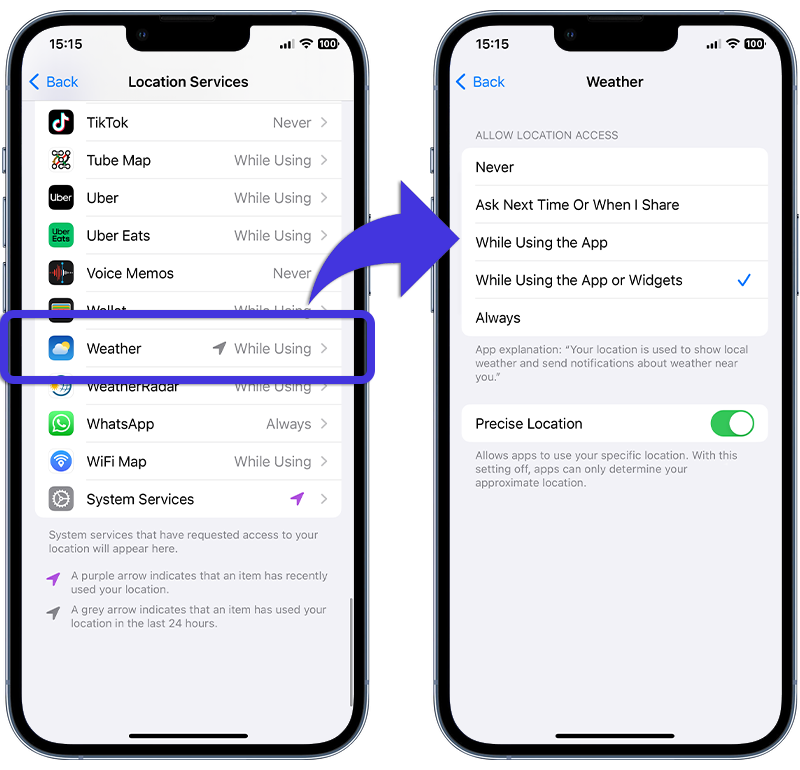
Fig 1. Modifying location settings for the Weather app.
6. Spyware
Another reason the location icon might appear is spyware. This is a type of malicious software that someone installs secretly so they can monitor your iPhone.
Once installed, spyware can track your GPS location, log your keystrokes (capturing passwords and credit card numbers), and monitor your calls, texts, emails, and apps.
It’s more common than you might think. In Certo’s 2025 Mobile Security Roundup, which analyzed nearly 600,000 device scans, 6.87% of devices showed medium or high security threats.
The most commonly detected spyware included mSpy, FlexiSpy, and TheTruthSpy, all of which can secretly track your location.
The best way to check your iPhone for spyware is to run a deep scan with an app like Certo AntiSpy. Here’s how to do it:
- Download Certo AntiSpy from the App Store.
- Open the app and tap Scan on the dashboard.
- Wait a few minutes while the scan checks your iPhone.
- Review the results and follow the on-screen steps to remove any threats.

Fig 2. Running a deep scan for spyware with Certo AntiSpy.
Other Reasons Why Location Services is On
Background app refresh
This feature allows apps to check for updates and new content in the background. If an app also uses location data as part of its functionality, the location services icon might appear even if you haven’t actively launched that app.
Location-based alerts and ads
Features like location-based reminders (e.g., “Remind me to buy milk when I’m near the grocery store”) and location-based Apple ads that use your geographical position to provide localized content might be accessing your location.
System services
You’ll find a section dedicated to System Services in the iPhone’s settings here: Settings > Privacy & Security > Location Services.
Many services, such as Setting Time Zone or Share My Location utilize your geographical position for different iOS functions.
Wi-Fi/Bluetooth scanning
Your iPhone regularly scans for nearby Wi-Fi networks and Bluetooth devices to improve location accuracy.
This can briefly trigger the location icon, even when no app is actively using your location.
You can turn this off under System Services by switching off Networking & Wireless, though Apple warns this may affect Wi-Fi and Bluetooth performance.
Health and fitness apps
Activity tracking or health apps might use your location to log outdoor workouts and routes or determine the distance covered.
Video: Why The Location Icon Randomly Appears On Your Phone
Check out this related video ⬇️

How to Find Out Which App Is Using Your Location
Whenever you see the blue location icon appear on your iPhone you can easily check which app or website is accessing your location.
Just unlock your iPhone and swipe down from the top right of the screen to access the Control Center. The app or website that has been using your location will then be shown at the very top of the Control Center.
Note: If you have an older style iPhone with a home button then swipe up from the bottom to access the Control Center.
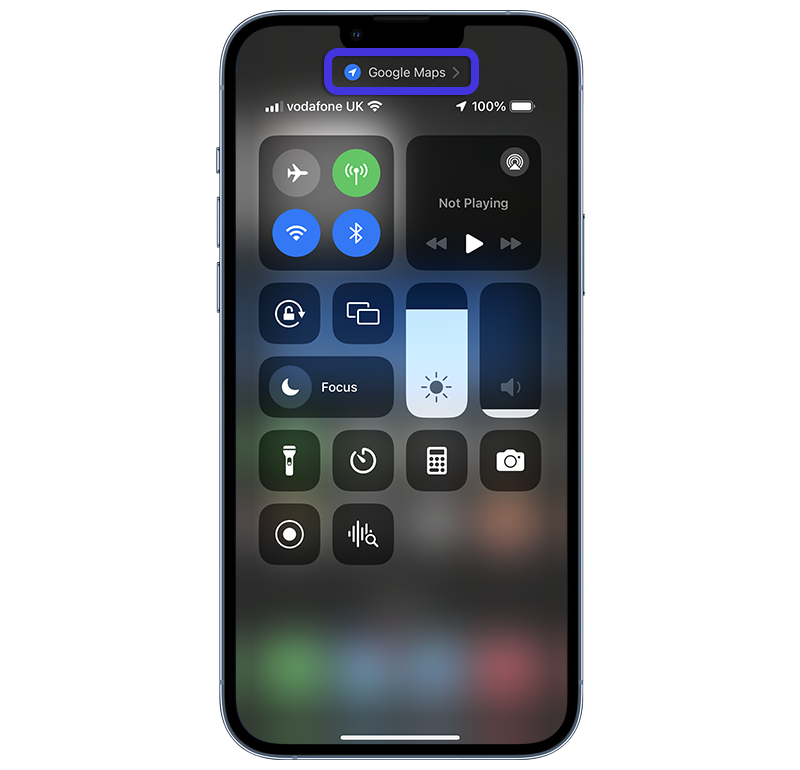
Fig 3. Control Center showing which app is accessing Location Services.
You can also easily see a list of all apps installed on your iPhone with access to your location. To do this, follow these steps:
- Open Settings: Tap on the “Settings” app icon on your iPhone’s home screen.
- Go to Privacy: Scroll down in the Settings menu and tap on “Privacy & Security.”
- Tap on Location Services: At the top of the Privacy menu, you’ll see “Location Services.” Tap on it.
- View Apps & Their Location Access: In the “Location Services” menu, you’ll see a list of apps installed on your iPhone. Next to each app, there will be an indication of its location access setting:
- Never: The app doesn’t have access to your location.
- Ask Next Time: The app will ask you the next time it wants to use your location.
- While Using the App or Widgets: The app can access your location only when it’s actively being used or when its widgets are in use.
- Always: The app can always access your location, even in the background.
- Check for the Arrow Icon: You might see an arrow icon next to each app. This arrow provides additional information about the app’s recent location access:
- No arrow: The app hasn’t used your location recently.
- Purple arrow: The app has used your location recently.
- Gray arrow: The app has used your location in the last 24 hours.
- Hollow purple arrow: The app uses a geofence (waiting for you to arrive at or leave a specific location).
Now you can understand which apps have been accessing your location recently.
- Tap on Individual Apps for More Details: To see more about how each app uses your location, you can tap on any app in the list. This will show you the specific location access you’ve granted to that app, and you can change permissions if needed.
Remember to check these settings periodically to maintain awareness and control over which apps can access your location. Adjusting permissions can also help in preserving battery life and protecting your privacy.
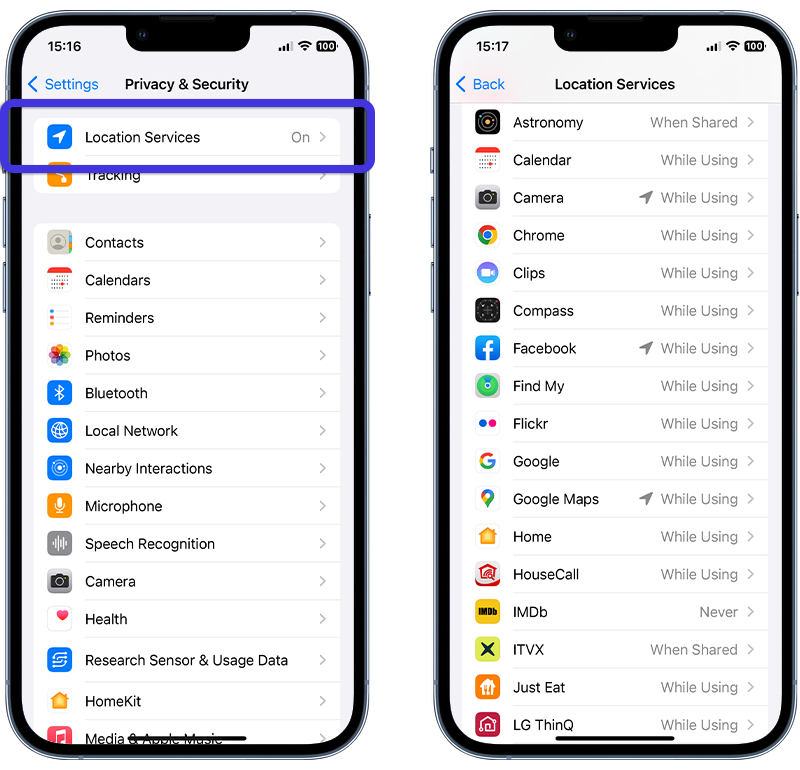
Fig 4. Displaying all apps with access to Location Services.
Pro Tip: Use App Privacy Report
If you have App Privacy Report turned on, then this can also be a great place to review which apps have recently accessed your location and when.
How to Limit Location Access?
If the frequent appearance of the location services icon bothers you or if you’re concerned about your privacy, there are steps you can take:
- Audit location permissions: Navigate to Settings > Privacy > Location Services. You can review and modify which apps can access your location and when.
- Limit background activities: For apps that don’t need to access your location in the background, adjust the settings to “While Using the App.”
- Download antispy software for your iPhone: iPhone users can use antivirus software like Certo AntiSpy to protect against malware tracking their location.
- Use Apple’s status bar icon: Apple provides a small arrow icon next to apps in the Location Services menu, indicating which app has recently used location data. This helps identify culprits.
- Turn off location for specific system services: If you delve into the System Services menu under Location Services, you can decide which essential functions to keep and disable the rest.
- Educate yourself: Whenever downloading a new app, be mindful of the permissions it requests, especially concerning location data. Only grant permissions you’re comfortable with.
Final Thoughts
If you often see the location icon popping up on your iPhone, it means that specific apps are continually tapping into your location data. It might be harmless, like a navigation app, or something more concerning, like spyware.
In today’s digital age, protecting your online privacy is crucial. Regularly checking your iPhone’s location settings isn’t just about saving battery—it’s about keeping your personal data safe.
For added peace of mind and to ensure your phone’s utmost security, it is a good idea to perform regular antivirus and spyware scans with a tool like Certo AntiSpy.

Expert Insight
“Many people who notice the location icon assume the worst, but in our experience scanning hundreds of thousands of devices, the cause is almost always a legitimate app or service.
That said, it’s always worth a quick check — spyware is designed to be invisible, and location tracking is one of its most common features.”
— Russell Kent-Payne, Co-founder & CEO, Certo Software
Frequently Asked Questions (FAQs)
What does the arrow next to the time mean on an iPhone?
The arrow next to the time on the status bar of your iPhone is a location services indicator. It shows that an app, service or website on your iPhone is requesting your location.
How to get rid of a hollow arrow on an iPhone?
A hollow arrow means an app or service is using geofencing. It’s waiting to alert you when you arrive at or leave a specific place, such as a location-based reminder.
To remove it, go to Settings > Privacy & Security > Location Services, find the app or system service with the hollow arrow, and change its access to Never or While Using the App.
How do I turn off location services on my iPhone?
You can fully disable location services by going to Settings > Privacy & Security > Location Services and turning it off. However, this will restrict location-based apps like Maps and Weather.
It also means Find My won’t be able to show where your iPhone is if it’s lost or stolen.
Sophia is a Senior Cybersecurity Writer at Certo, with over five years of experience writing about digital security, privacy, and emerging threats. Drawing on a background in IT and technology, she specializes in translating complex cybersecurity topics into clear, practical guidance that helps everyday users stay protected online.